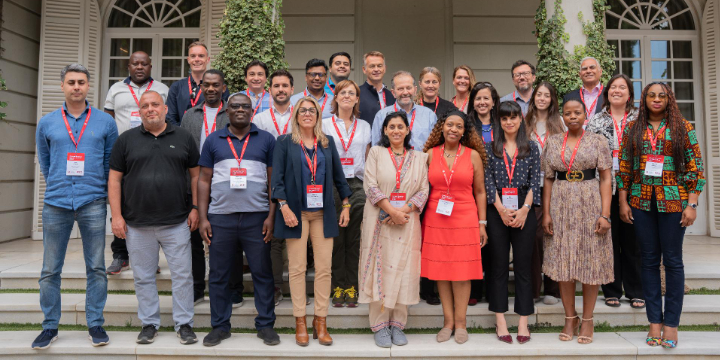
From 8 to 12 June 2026, Ares Marí, from FEMAC, participated in the Barcelona Competitiveness Summer School, an international programme organised by the Foundation for Clusters and Competitiveness and IESE Business School, bringing together professionals, policymakers and cluster organisations from around the world to explore the factors that drive the competitiveness of industries and territories.
This participation forms part of FEMAC’s strategy to strengthen cluster management excellence, internationalisation and capacity building, with the aim of incorporating new methodologies and tools into the projects and initiatives promoted by the cluster.
Throughout the week, the programme addressed topics such as industry analysis, value chains, competitiveness policies, cluster-based economic development and the creation of innovative ecosystems.
The different sessions provided insights into methodologies for identifying territorial competitive advantages, analysing industries within their value chains and defining strategies aimed at generating greater economic and business impact.
A key part of the programme was the analysis of international case studies, which helped translate theoretical concepts into real-world situations. Among the cases discussed were cluster development experiences in Denmark, regional development initiatives in the United Kingdom and competitiveness reinforcement programmes in Chile’s agri-food sector, among others.
These examples highlighted the importance of correctly identifying clusters and their sub-sectors, understanding the specific needs of each ecosystem and promoting shared strategies between companies, knowledge institutions and public administrations. The programme also explored business strategy and differentiation cases, showing how organisations can create new market opportunities through innovation and value creation.
One of the main takeaways was the importance of complementing quantitative data with the knowledge of local stakeholders in order to identify development opportunities and design initiatives with real impact. The sessions also reinforced the need to build shared visions among companies, technology centres, universities and public institutions to create more competitive and resilient ecosystems.
Participation in the Barcelona Competitiveness Summer School will allow FEMAC to incorporate the knowledge acquired into future projects and initiatives, while strengthening the technical capabilities of the cluster team in areas related to competitiveness, innovation and ecosystem development.
Furthermore, this experience contributes to strengthening FEMAC’s international positioning and expanding its network of contacts with professionals, institutions and leading organisations in the field of competitiveness policies and cluster development.
FEMAC would like to thank the Foundation for Clusters and Competitiveness, IESE Business School and especially Emiliano Duch and Reza Zadeh for organising this programme and for the opportunity to participate in this international learning experience.